Program of Studies
Academic English
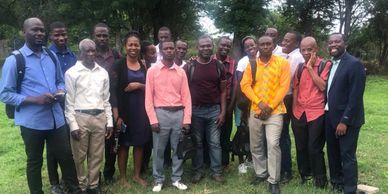
Academic English is a formal style of language used in universities and scholarly work. It is clear, precise, and structured, with a focus on presenting ideas logically and supporting them with evidence. Unlike everyday English, it avoids slang and personal opinions, emphasizing objectivity and critical thinking.
Interpreting

Interpreting is the art of converting spoken or signed communication from one language into another in real time, ensuring clarity, accuracy, and cultural understanding. It plays a vital role in bridging language barriers in settings such as business, healthcare, legal proceedings, and international events. .
Linquistic Faulty
Linquistic Faulty

The Linguistic Faculty focuses on the study of languages, communication, and cultural understanding. It equips students with strong language skills, as well as knowledge in translation, interpreting, and linguistics, preparing them for careers in global and multicultural environments.
Discover Excellence at Messiah ULEM
Pastoral Ministry
Pastoral Ministry
Pastoral Ministry

Pastoral Ministry prepares students for leadership and service within religious and community settings. The program focuses on spiritual development, counseling, leadership skills, and effective ministry practices to support individuals and communities.
Science Affairs
Pastoral Ministry
Pastoral Ministry
Science of Affairs introduces students to the principles of business, management, and organizational operations. It develops analytical, decision-making, and leadership skills needed to succeed in modern business environments.
Science of Education
Science of Education
Science of Education
Science of Education explores the foundations of teaching and learning. Students gain knowledge in educational theories, instructional methods, and classroom management, preparing them for careers in education and training.
Human Science
Science of Education
Science of Education
Human Science examines human behavior, development, and social interaction. The program equips students with critical thinking and research skills to understand individuals and societies in diverse contexts.
Master & Doctorate Programs
Administration des Affaires (M.B.A.)

The M.B.A. program develops advanced knowledge in business management, leadership, and strategic decision-making. It prepares graduates for leadership roles in organizations across various industries.
Leadership Transformational (M.A.)

This program focuses on developing innovative and ethical leaders capable of driving positive change. Students learn leadership theories, organizational development, and strategies for transformation in diverse settings.
Theological Studies (M.P.T.)
Doctorate Programs Transformational Leadership (PhD)
Theological Studies provides advanced understanding of theology, ministry, and religious leadership. It prepares students for higher-level roles in ministry, teaching, and faith-based organizations. .
Doctorate Programs Transformational Leadership (PhD)
Doctorate Programs Doctorate in Transformational Leadership (D.T.L.)
Doctorate Programs Transformational Leadership (PhD)
This doctoral program emphasizes advanced research and leadership theory. It prepares scholars and professionals to lead transformational change and contribute to academic and professional knowledge.
Doctorate Programs Doctor of Business Administration (D.B.A.)
Doctorate Programs Doctorate in Transformational Leadership (D.T.L.)
Doctorate Programs Doctorate in Transformational Leadership (D.T.L.)
The D.B.A. focuses on applied research and advanced business practices. It equips professionals with the expertise to solve complex organizational challenges and lead at the highest levels.
Doctorate Programs Doctorate in Transformational Leadership (D.T.L.)
Doctorate Programs Doctorate in Transformational Leadership (D.T.L.)
Doctorate Programs Doctorate in Transformational Leadership (D.T.L.)
This program develops high-level leadership competencies with a focus on innovation, ethics, and global impact. Graduates are prepared to influence and transform organizations and communities.